The problem
The usual fix for an unreliable oscillator is a second oscillator. Then a third. Eventually the chart holds four momentum tools that disagree, and the one you follow is whichever agrees with the position you already want.
More indicators do not produce more confidence. They produce more permission.
What it shows
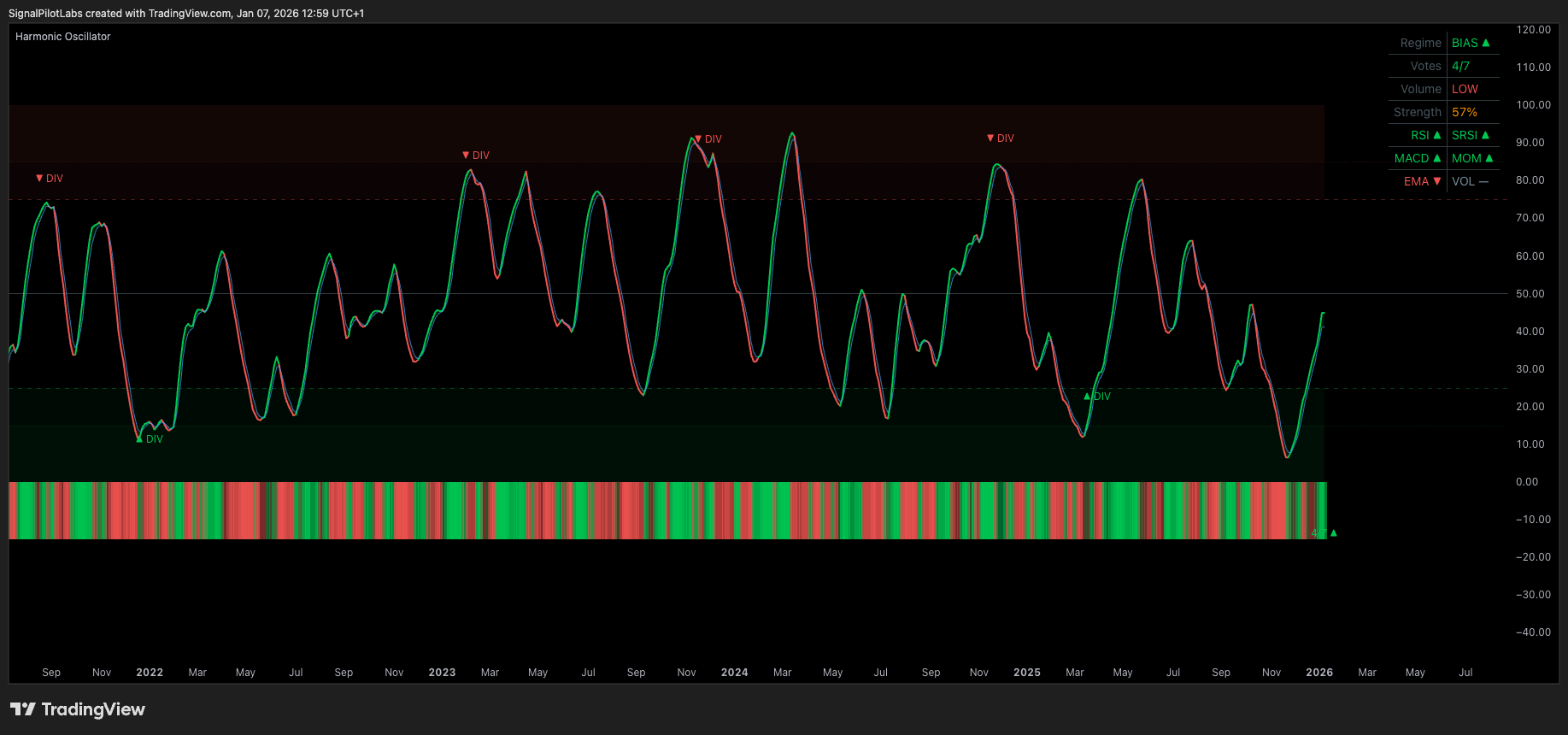
Harmonic Oscillator runs seven components, each casting a vote, and reports the count. Reading it takes one glance instead of four.
| Regime | Composite | Meaning |
|---|---|---|
| TRENDING ▲ / ▼ | Past 65 with the 200 EMA rising, or under 35 with it falling | Strong directional momentum |
| BIAS ▲ / ▼ | Past 55, or under 45 | Moderate directional lean |
| RANGING | Between 45 and 55 | No directional consensus |
The seven components
Three signal modes set the threshold: Conservative needs six votes, Balanced five, Aggressive four. The vote count is always visible, so a 4/7 reading never looks like a 7/7 one.
Non-repainting, and what that means here
Every marker is confirmed at bar close and stays where it printed. What you see in history is exactly what you would have seen live, and that is the only way a backtest of your own eyes means anything.
What it isn’t
Seven components agreeing is a stronger reading than one. It is not a guarantee, and Harmonic Oscillator does not present it as a trade instruction.
Who it’s for
Traders carrying three or four momentum indicators who want the disagreement resolved explicitly instead of resolving it by preference.
On a real chart
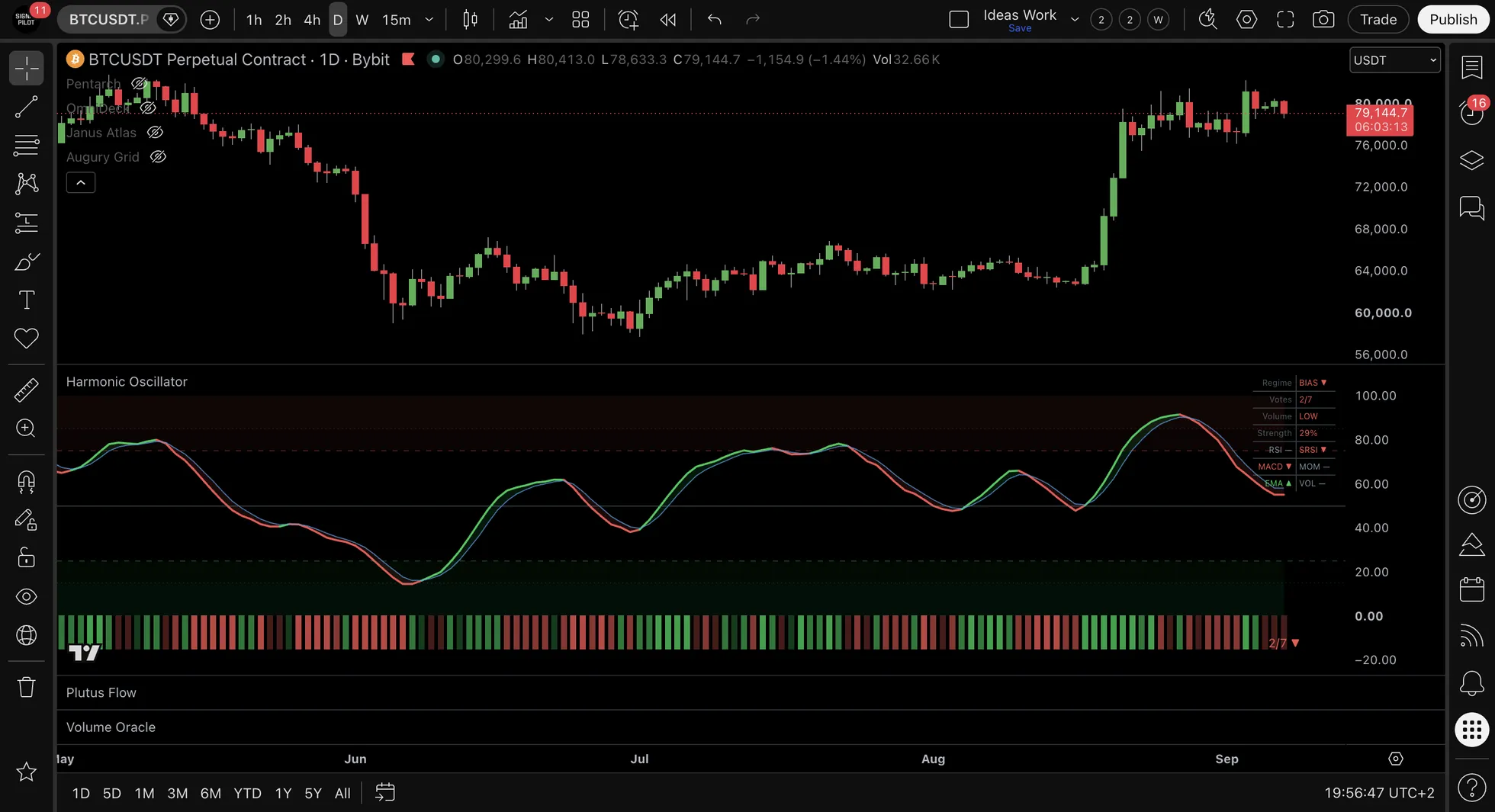
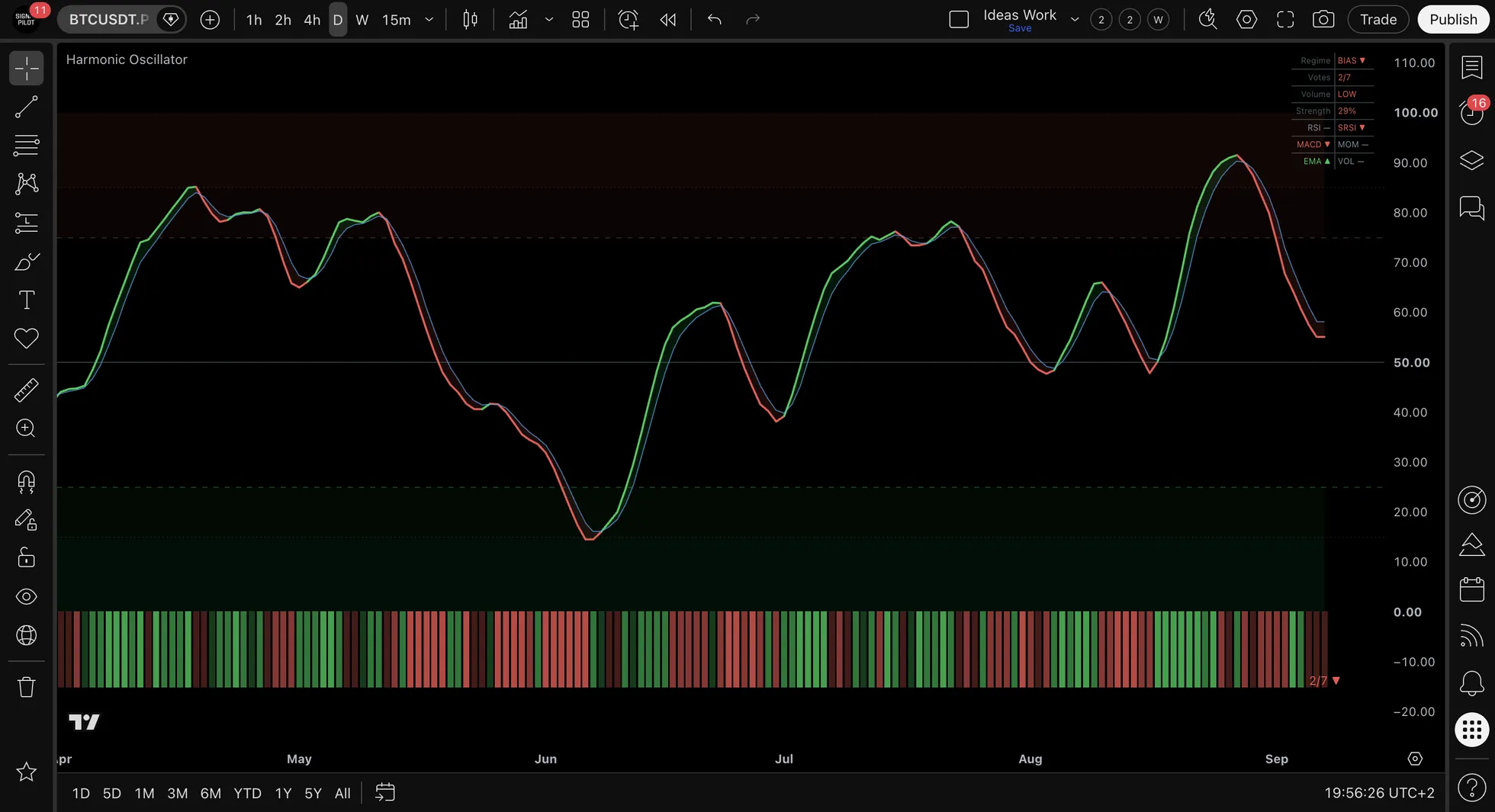
Every setting, every output and every panel is documented in the reference for this indicator.
What we tested
Measurements and worked examples that use this indicator, published in full.
- Judge an indicator by its misses: ETH, June and August 2026
- Are half your indicators saying the same thing?
- What waiting for confirmation actually costs
Try Harmonic Oscillator
7-day free trial, no credit card. 7-day money-back guarantee. All future updates included, plus 100 free lessons in the education hub.
Part of The Elite Seven. More on cycle structure in Insights and the Chronicle.